Best Time to Visit Chiang Mai: A Month-by-Month Guide to Weather, Smoke Season and Festivals (2026–2027)
By Connect Booking 9 min read
When to visit Chiang Mai, month by month: cool-season sunshine, Feb–Apr smoke season, green rainy months, and Yi Peng, Songkran and Flower Festival dates.
The best time to visit Chiang Mai is November to February, the cool, dry season, when days are sunny and around 29–31°C, mornings are fresh, and it hardly rains. It's also peak season, so book early. The time to think twice about is February to April, when smoke from agricultural and forest burning often blankets the north. And don't rule out the rainy season (May to October): the countryside is lush, waterfalls are full and hotels are cheaper. Below is Chiang Mai month by month, using official 1991–2020 climate averages for the city.
Chiang Mai weather by month (averages)
Figures are the official 1991–2020 World Meteorological Organization climate normals for Chiang Mai city (station 48327), archived by NOAA from Thai Meteorological Department data. Rainy days are days with at least 1 mm of rain.
| Month | Avg high | Avg low | Rain | Rainy days |
|---|---|---|---|---|
| January | 30°C | 16°C | 11 mm | 1 |
| February | 33°C | 17°C | 10 mm | 1 |
| March | 35°C | 20°C | 20 mm | 2 |
| April | 37°C | 23°C | 54 mm | 5 |
| May | 35°C | 24°C | 168 mm | 12 |
| June | 33°C | 25°C | 118 mm | 12 |
| July | 32°C | 24°C | 149 mm | 14 |
| August | 32°C | 24°C | 223 mm | 17 |
| September | 32°C | 24°C | 207 mm | 15 |
| October | 32°C | 23°C | 124 mm | 9 |
| November | 31°C | 20°C | 41 mm | 3 |
| December | 29°C | 17°C | 14 mm | 1 |
The quick answer by travel style
- Best weather overall: November to early February.
- Trekking and mountain views: November to January, when skies are clearest and trails are dry.
- Waterfalls and green rice fields: August to October.
- Fewer crowds and lower prices: May to October (rainy season), outside school holidays.
- Festivals: Yi Peng (November), the Flower Festival (early February) and Songkran (April).
- Think twice: February to April if you have asthma or heart or lung conditions, or you're travelling with small children, because of the smoke.
Cool season: November to February (best time to visit)
November
The rains have mostly gone, the air clears and temperatures drop. November is many people's favourite month: green countryside, sunny days and the city's biggest festival. In 2026, Yi Peng and Loy Krathong run 23–25 November, with lanterns, candlelit temples and krathongs floating on the Ping River. See our Yi Peng 2026 Chiang Mai guide for the lantern rules and dates. Book rooms early for festival week.
December
The coolest, driest stretch, and high season. Average lows are about 17°C, and the coldest mornings in the city can be much cooler. In the mountains it's colder still: in January 2026, frost formed in some areas of Chiang Mai, and the temperature at Kew Mae Pan on Doi Inthanon fell to 0.0°C on 9 January, according to the Thai Meteorological Department. Christmas and New Year are busy, so book well ahead.
January
Clear, sunny days around 30°C and fresh mornings around 16°C. It's a perfect month for trekking and mountain viewpoints. Haze can start to build late in the month in some years, so keep an eye on the air quality forecast if you're coming in late January.
February
Still dry and pleasant at first, with warmer afternoons (about 33°C). The Chiang Mai Flower Festival is usually held in early February, with a parade of flower-covered floats and displays at Nong Buak Haad Park. The 2027 dates hadn't been announced when we checked in November 2026. Chinese New Year falls on 6 February 2027. Smoke season often begins this month.
Smoke season: roughly February to April
This is the most important thing many visitors don't know about Chiang Mai. Agricultural and forest burning across northern Thailand and neighbouring countries fills the valley with haze. Haze is most frequent in February, March and April, with March typically the haziest month. In early April 2026, the Ministry of Public Health reported PM2.5 in Chiang Mai as high as 314.3 µg/m³ and advised residents and foreign visitors to avoid long periods outdoors and wear N95 masks.
If your trip falls in these months:
- Check air quality daily (the government Air4Thai app is a good start) and keep plans flexible.
- Choose accommodation with good air-conditioning or an air purifier, and pack N95 masks.
- Swap long hikes for cooking classes, museums, spas and indoor markets on bad-air days.
- Consider spending more of your trip on the islands, where the air is usually much cleaner.
Hot season: March to May
March
Hot (about 35°C) and the haziest month on average. If you have flexible dates, March is the month to avoid in Chiang Mai.
April
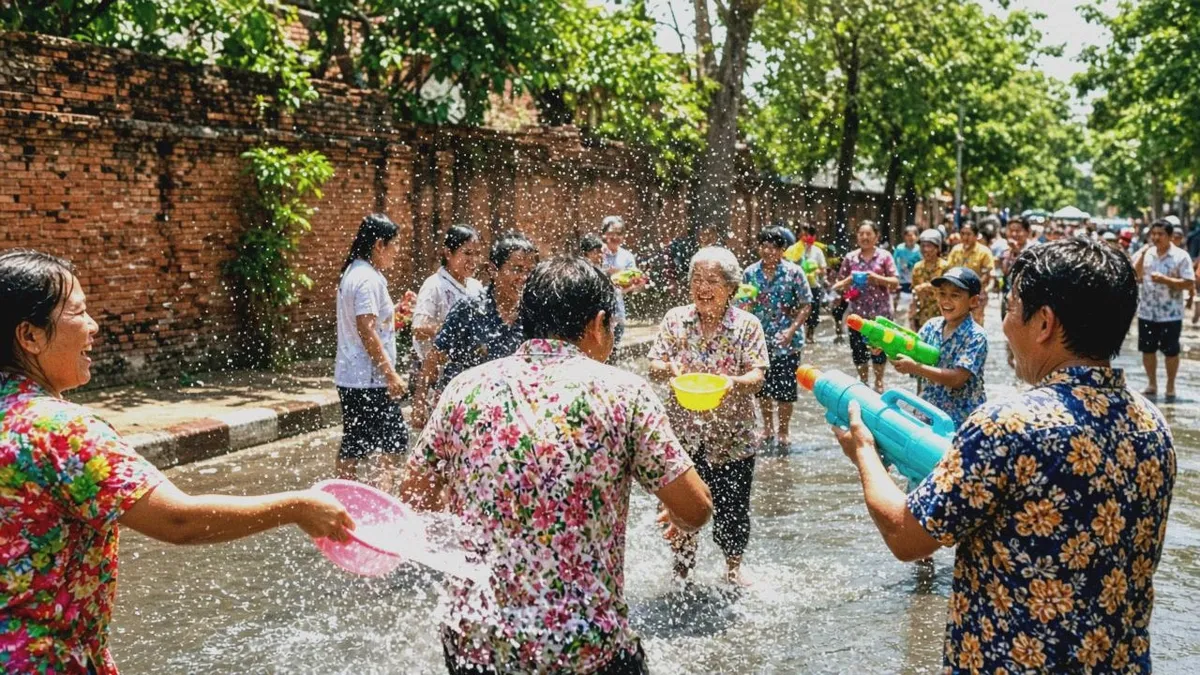
The hottest month, with average highs of about 37°C, but also the month of Songkran, Thai New Year. The national holiday runs 13–15 April, and Chiang Mai's celebrations are famous for good-natured water fights around the moat. In 2026, Chiang Mai's water festival ran from 11 to 13 April. Expect to get soaked, and keep your phone in a waterproof pouch. Pre-monsoon storms start to clear the smoke later in the month.
May
The rains arrive, usually as afternoon thunderstorms, and the air clears. It's still hot, but the first rains bring the countryside back to life. Prices drop as the high season ends.
Rainy (green) season: May to October
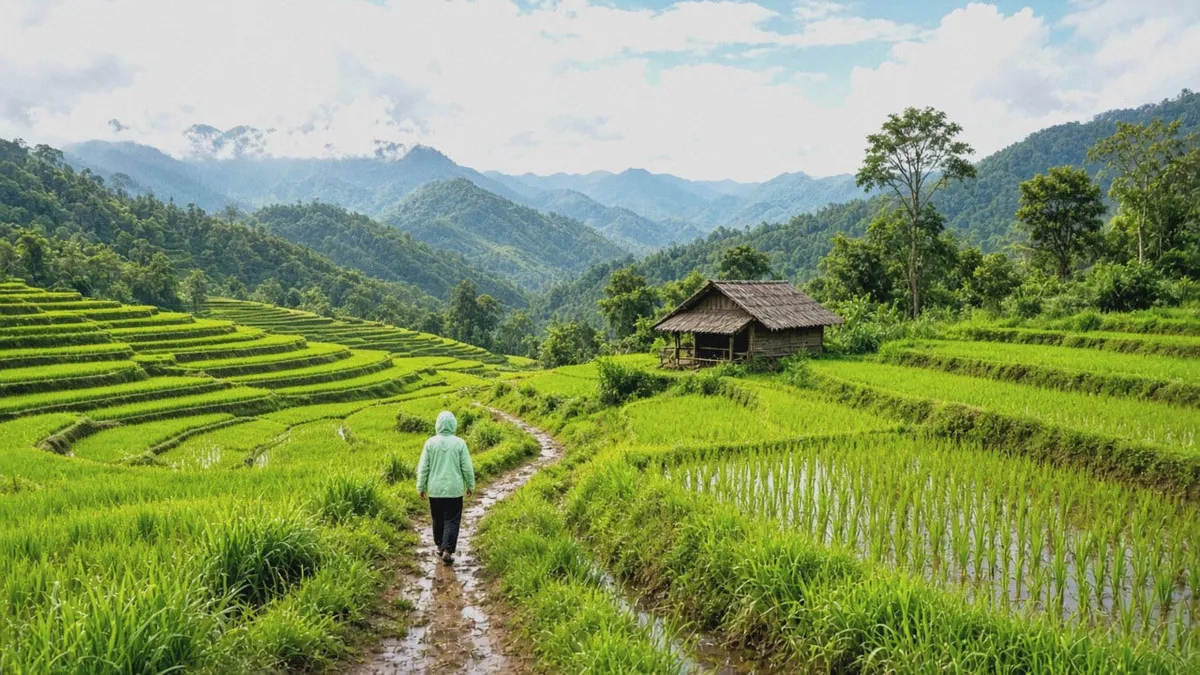
Rain usually comes in heavy afternoon or evening showers rather than all day, so mornings are often good for sightseeing. The countryside turns emerald green, rice terraces fill with water and waterfalls are at their most impressive.
- June and July: regular showers, warm days around 32–33°C and very few tourists.
- August: the wettest month, with around 223 mm of rain over about 17 days with at least 1 mm of rain. Trails are muddy, and heavy rain can cause landslides on mountain roads.
- September: almost as wet as August. Rivers are high, so follow your guide's advice on rafting and river crossings.
- October: the rains ease and the countryside is at its greenest. It's a lovely shoulder month before the high season.
Travelling in the rainy season? Pack a light rain jacket and quick-dry clothes, use insect repellent, and keep a buffer day in case weather disrupts a mountain trip.
What to do in each season
- Cool season (Nov–Feb): a guided 1-day trek in Doi Inthanon National Park is at its best, with clear views and cool air. Bring a warm layer.
- Smoke season (Feb–Apr): pick shorter outdoor activities, such as a half-day ethical elephant sanctuary experience or the half-day natural elephant care programme, on days when the air is better.
- Rainy season (May–Oct): waterfalls are full. The full-day ethical elephant, nature and wellness experience with TK pairs time with elephants and the green countryside.
Elephant sanctuary visits with no riding run all year. Mornings are cooler and drier in every season.
Frequently asked questions
What is the best month to visit Chiang Mai?
November, December and January. They're dry and sunny, with cool mornings around 16–20°C. November also has the Yi Peng lantern festival.
When is the burning season in Chiang Mai?
Roughly February to April. Haze is most frequent in March, and in bad years PM2.5 levels can be very high. Check the air quality daily if you travel then.
Is it worth visiting Chiang Mai in the rainy season?
Yes, if you're flexible. Rain mostly falls in afternoon or evening downpours, the countryside is green, waterfalls are full and prices are lower. August and September are the wettest months.
How cold does Chiang Mai get in December?
Average lows are about 17°C in the city, and the coldest mornings can be much cooler. Mountain tops such as Doi Inthanon can fall to freezing on the coldest mornings.
What is the hottest month in Chiang Mai?
April, with average highs of about 37°C. Songkran, the Thai New Year water festival, cools things down in mid-April.
When is Songkran in Chiang Mai?
Songkran is on 13 April, and the national holiday usually runs 13–15 April. Chiang Mai's water festival can start a couple of days earlier; it ran from 11 to 13 April in 2026.
Start planning
Pick your season, then plan your days around the weather: mountain treks in the cool months, waterfalls in the green season, and half-day trips when the air is hazy. When you've chosen your dates, browse Chiang Mai tours on Connect Booking.
Weather figures are 1991–2020 averages; actual conditions vary year to year. Festival dates for 2027 should be checked when announced. Facts checked November 2026.
Sources
- NOAA National Centers for Environmental Information — WMO climate normals 1991–2020, Chiang Mai station 48327, from Thai Meteorological Department data (monthly temperatures, rainfall, and days with at least 1 mm of rain) — https://www.nodc.noaa.gov/archive/arc0216/0253808/1.1/data/0-data/Region-2-WMO-Normals-9120/Thailand/CSV/ChiangMai_48327.csv — accessed 17 November 2026
- PRD, citing the Ministry of Public Health — severe dust pollution in northern provinces (PM2.5 314.3 µg/m³ in Chiang Mai) — https://thailand.prd.go.th/en/content/category/detail/id/43/cid/2078/iid/492150 — published 7 April 2026; accessed 16 November 2026
- Thai Meteorological Department — Monthly Weather Summary in Thailand, January 2026 (frost in Chiang Mai; 0.0°C at Kew Mae Pan, Doi Inthanon, on 9 January) — https://www.tmd.go.th/media/climate/climate-monthly/january-2026.pdf — accessed 17 November 2026
- Chiang Mai Provincial Public Relations Office — Yi Peng 2026 dates (23–25 November 2026) — https://chiangmai.prd.go.th/th/content/category/detail/id/9/iid/559223 — published 11 November 2026; accessed 16 November 2026
- PRD — Songkran Day (13 April) — https://thailand.prd.go.th/en/content/category/detail/id/48/iid/494034 — published 12 April 2026; accessed 16 November 2026
- TAT Newsroom — Songkran Festival 2026 (incl. Chiang Mai Water Festival 11–13 April 2026) — https://www.tatnews.org/2026/03/songkran-festival-2026-to-proceed-nationwide-welcoming-global-visitors-to-thailands-unesco-recognised-new-year-celebration/ — published 26 March 2026; accessed 16 November 2026
- The Chiang Mai Brief — Chiang Mai Flower Festival (early February at Nong Buak Haad Park; 2027 dates not yet announced) — https://chiangmaibrief.com/events/chiang-mai-flower-festival/ — published 23 September 2026; accessed 16 November 2026
- UK FCDO — Thailand safety and security (rainy season, flash floods and landslides in the north) — https://www.gov.uk/foreign-travel-advice/thailand/safety-and-security — accessed 16 November 2026
Tours for this trip

Chiang Mai Elephant Sanctuary
1 day trekking
From฿1,800/ person
Book now
TK Ethical Elephant Sanctuary
Full-Day Ethical Elephant & Nature Adventure and Wellness Experiences
From฿2,000/ person
Book now
Elephant jungle paradise park
โปรแกรมเลี้ยงช้างตามธรรมชาติครึ่งวัน
From฿1,700/ person
Book now
Chiang Mai Elephant Sanctuary
Half day Ethical Elephant Sanctuary Experience (Half Day)
From฿1,500/ person
Book now